We study sacred plants and fungi as spirits and healers across the religious worlds, colonial histories, and struggles for ecological and social justice that shape their lives.
Estudiamos las plantas y los hongos sagrados como espíritus y seres sanador@s, cuya vida está entrelazada con mundos religiosos, historias coloniales y luchas por la justicia ecológica y social.
Researching Sacred Ecologies
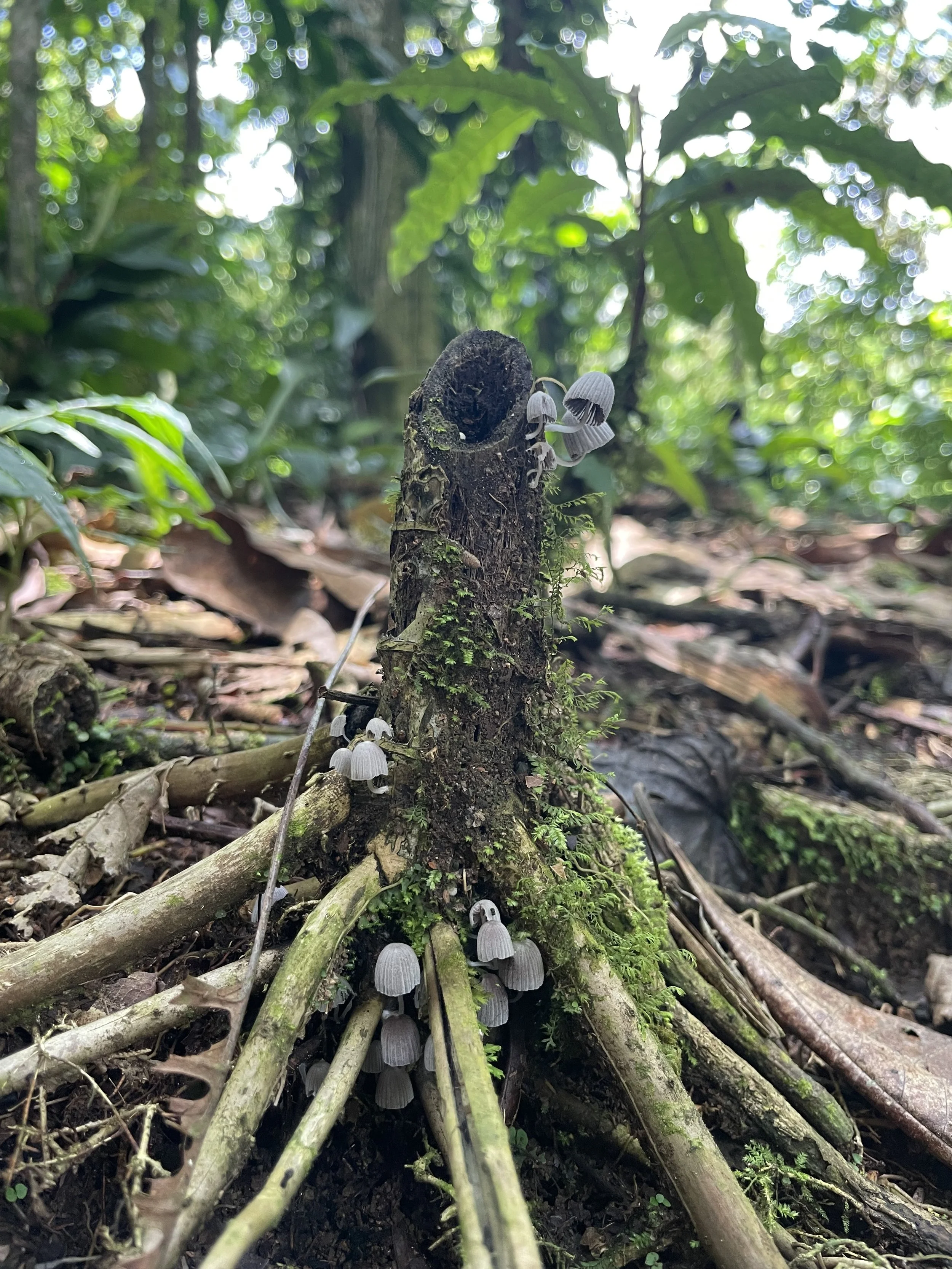
From the smallest organisms in the soil to the spirits who guard the land, sacred plants and fungi inhabit worlds alive with biological, human, and divine relationships. Their lives unfold through rain and roots, insects and animals, and through the care and knowledge of generations. They grow and survive with the elders who remember them, the spirits who guard them, the ceremonies where they speak, heal, and teach, and the land that people still answer to.
These sacred ecologies carry centuries of history. Colonial agriculture, extractive economies, changing rainfall, soil contamination, and habitat destruction have shaped the territories where sacred plants and fungi emerge and flourish. In worlds where the vitality of the earth and the presence of the divine are intimately intertwined, changes in the lives of plants and fungi reach into the possibilities of healing, knowledge, and spiritual experiences. Our research asks how ecological and social crises become perceptible in the biological lives of sacred plants and fungi and in the spiritual lives of people.
The Sacred Plants and Fungi Lab investigates how sacred plants and fungi live, grow, and circulate across changing ecological, religious, and political landscapes. Our research examines the effects of climate change, agrochemicals, and habitat transformation on their biological lives, alongside the ways colonial histories, psychedelic science, and therapeutic markets reshape access to land, traditional healing practices, and spiritual knowledge. We study these processes through the experiences of the people who cultivate, gather, heal with, and care for sacred plants and fungi, attending to the spiritual and divine relationships through which their presence is understood.
Ecological and social justice are at the heart of our work. We ask how the changing conditions of sacred life affect the people and territories connected to these beings, whose knowledge and labor sustain their circulation, and who exercises authority over their scientific, therapeutic, and commercial uses.
Methods
Our research begins in the territories where sacred plants and fungi live, and extends into the archives, institutions, and economies through which they have been collected, classified, and represented. We approach knowledge as something learned through relationships, shaped by stories and encounters, and sustained through responsibilities to people, sacred beings, and land.
Archival research. We return to colonial, missionary, and scientific archives, from records of persecution and travel accounts to botanical collections and pharmacological studies. We examine how sacred plants and fungi were named, classified, and represented, tracing the histories of power that shaped their circulation and the voices silenced along the way.
Multispecies and relational ethnography. We walk through territories, accompany those who gather sacred plants and fungi, participate in ceremonies, and learn from healers, elders, and other knowledge holders. These encounters bring us into relationships with the living ecologies and sacred presences through which knowledge and healing become possible.
Visual ethnography. Through photography and film, we follow the forms, textures, seasons, and changing habitats of sacred plants and fungi. Images document ecological transformations while creating opportunities for collaboration, shared interpretation, and the circulation of knowledge on terms communities help define.
Our research remains accountable to the people, sacred beings, and territories through which its knowledge becomes possible.
Investigar ecologías sagradas
Las plantas y los hongos sagrados habitan mundos donde la tierra está viva, poblada de potencias espirituales y divinas, y donde la presencia de los seres sagrados moldea las posibilidades de la sanación, del conocimiento y de la vida humana. Crecen y perduran en relación: con los mayores que los recuerdan, con los espíritus que los custodian, con las ceremonias donde hablan, sanan y enseñan, y con la tierra ante la cual la gente sigue respondiendo. Son también seres vivos con sus propios ritmos biológicos: maduran lentamente en suelos desérticos, crecen en el sotobosque de las selvas tropicales, trepan hacia el dosel o brotan del micelio cuando llegan las lluvias.
Los seres sagrados pueden comunicarse, guiar, sanar, guardar silencio o retirarse. Los cambios en las lluvias, la contaminación de los suelos y la destrucción de los hábitats transforman los lugares donde aparecen, y esas transformaciones adquieren un sentido espiritual en mundos donde la vitalidad de la tierra y la presencia de lo divino están profundamente entrelazadas. Nuestra investigación indaga cómo la crisis ecológica se vuelve perceptible a través de la experiencia religiosa: en la ausencia de una planta antes familiar, en una sanación que flaquea, en el silencio doloroso de un lugar donde la vida sagrada alguna vez floreció.
Este trabajo nace de la tensión entre la vitalidad persistente de la vida sagrada y las heridas que cargan territorios marcados por el despojo colonial, la devastación ecológica y el extractivismo. Hoy, la expansión global de la ciencia psicodélica y de los mercados terapéuticos transforma la circulación de las plantas y los hongos sagrados. El Laboratorio aborda estas historias desde la inseparabilidad de la justicia ecológica y la justicia social, y se pregunta quiénes tienen acceso a la tierra, quiénes sostienen con su trabajo la vida de estos seres, qué saberes detentan autoridad y qué mundos religiosos se transforman cuando los seres sagrados se convierten en objeto de interés científico y comercial.
Métodos
Nuestra investigación se inscribe en historias en las que las plantas, los hongos y los saberes indígenas han sido recolectados, clasificados, representados y puestos en circulación por instituciones científicas y coloniales. Entendemos la investigación como una práctica de aprendizaje que se teje en relación.
Investigación de archivo. Volvemos a los archivos a través de los cuales las plantas y los hongos sagrados ingresaron al conocimiento colonial, misionero y científico: expedientes de persecución, colecciones botánicas, estudios farmacológicos y relatos de viaje. Leyéndolos a contrapelo, rastreamos cómo los seres sagrados fueron nombrados, clasificados y representados, y qué voces fueron silenciadas en el camino.
Etnografía multiespecie y relacional. Recorriendo territorios, acompañando a quienes recolectan plantas y hongos sagrados, participando en ceremonias y escuchando el testimonio de sanadoras, sanadores y mayores, atendemos a plantas, hongos, espíritus y personas como partícipes de mundos compartidos. Desde el sentipensar, reconocemos la protección, la guía, la desconfianza, el silencio y los límites impuestos al acceso a lugares y saberes sagrados como parte de la indagación misma.
Etnografía visual. A través de la fotografía y el cine, atendemos a las formas, las texturas y las estaciones de las plantas y los hongos sagrados, y a los paisajes donde aparecen y desaparecen. Las imágenes se vuelven una manera de documentar el cambio ecológico, de trabajar junto a las comunidades y de compartir conocimientos en términos que ellas mismas ayudan a definir.
Nuestra investigación responde ante las personas, los seres sagrados y los territorios que hacen posible su conocimiento.
© 2026 Annalisa Butticci, Sacred Plants and Fungi Lab. All rights reserved / Todos los derechos reservados.